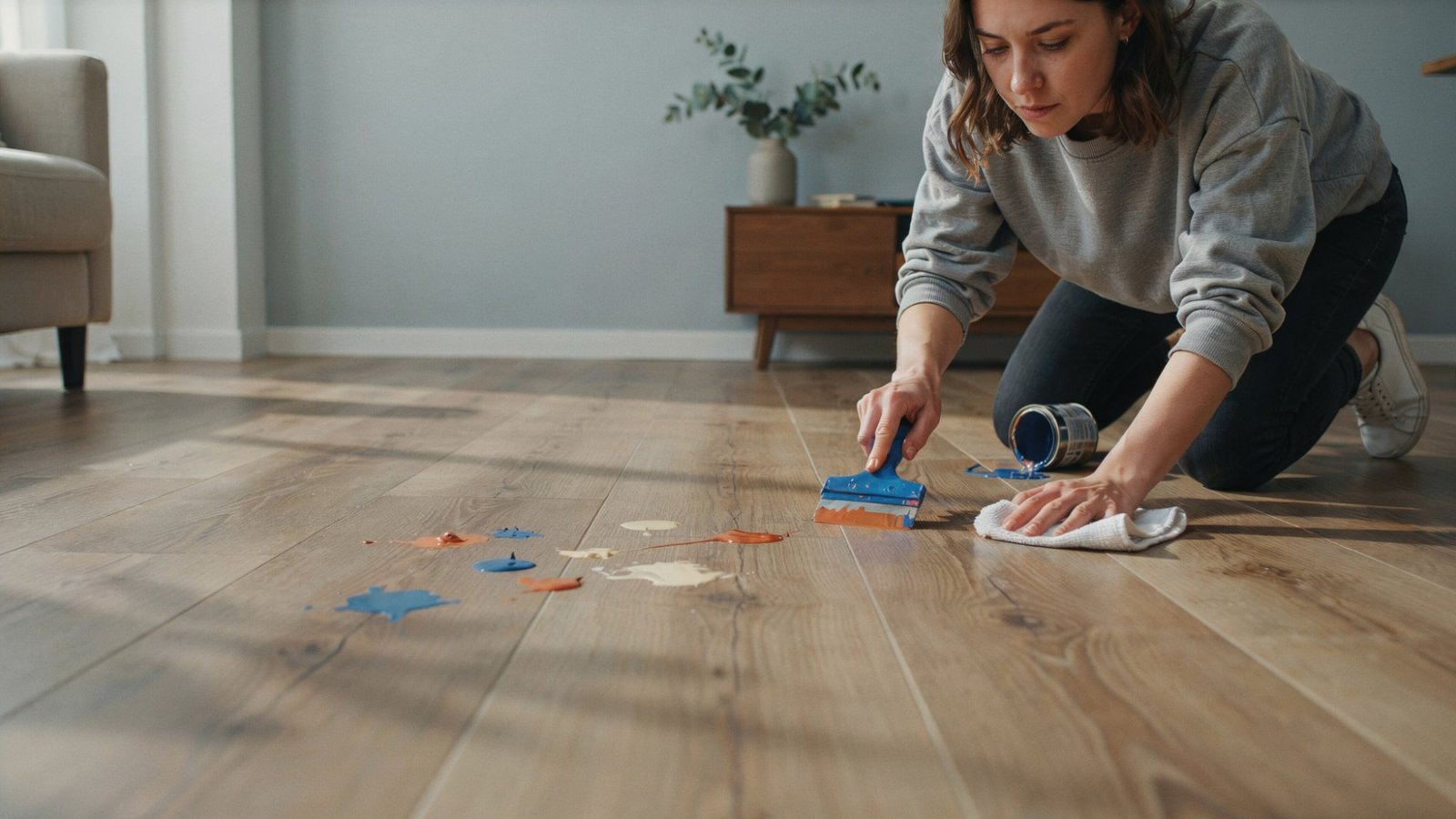
Paint on your vinyl floor? Don't worry, it happens to the best of us.
This article will show you exactly how to get paint off vinyl floors without causing any damage. You will find simple methods that actually work, tips for dried paint, and advice for vinyl tiles.
I have helped many people fix this exact problem, and the right approach makes all the difference.
We will cover safe removal methods for all paint types, how to handle dried and stubborn paint, common mistakes to avoid, and quick tips to make the job easier.
Let's get that floor looking clean again.
Before You Start Removing Paint From Vinyl Floors
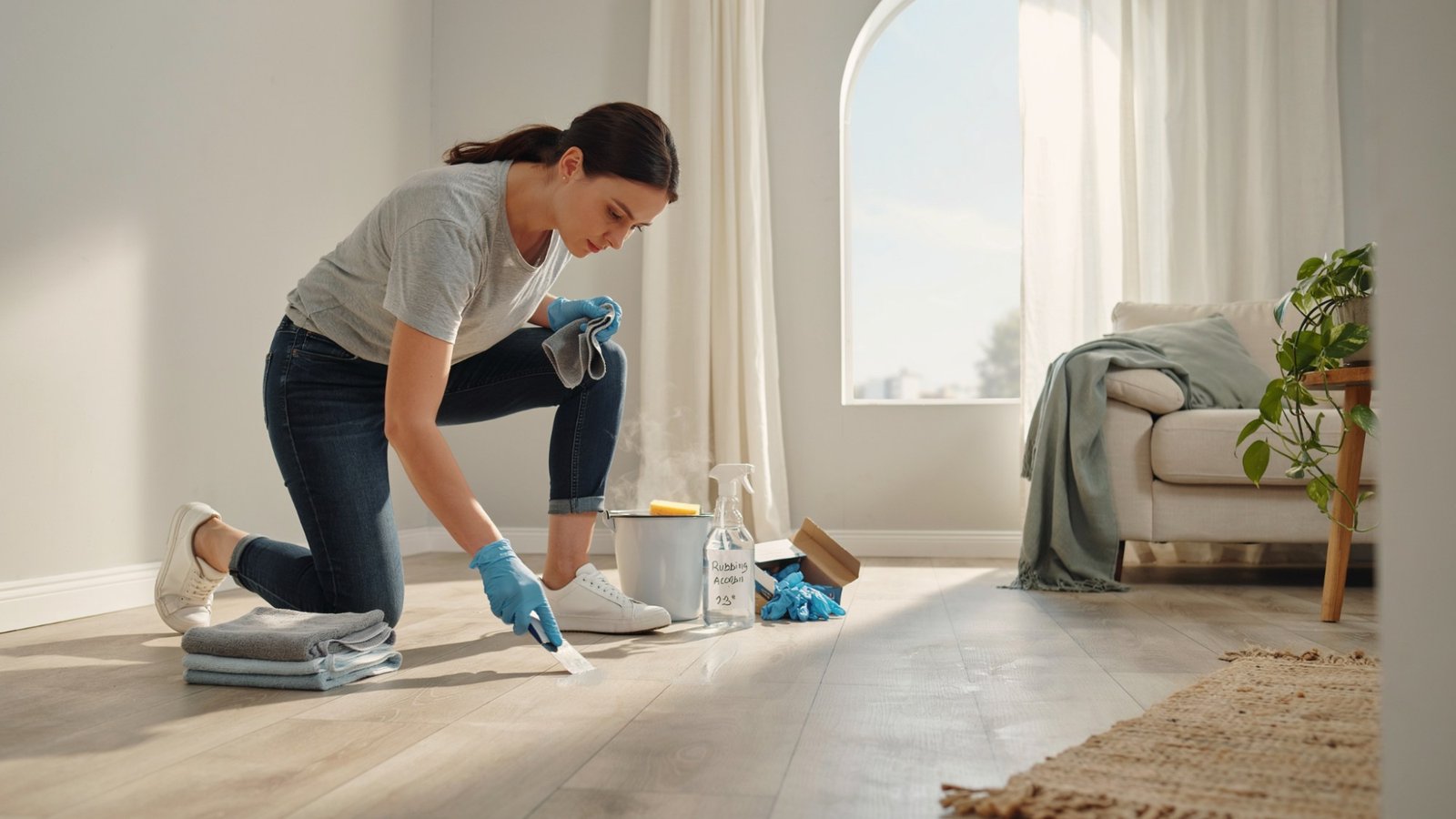
Before you grab any tools or cleaning products, there are a few things you should know. Taking a moment to prepare can save you from damaging your floor.
First, check the type of paint. Water-based and oil-based paints need different removal methods. This helps you pick the right approach from the start.
Next, look at the condition of your vinyl floor. Older vinyl can be fragile, so harsh scraping or strong chemicals can make things worse.
Always test any product in a small hidden area first. Some solvents can discolor or soften vinyl, so this step is worth doing before treating the main stain.
Keep the area ventilated while you work. Some paint removers have strong fumes, so open a window or run a fan nearby.
How to Get Paint Off Vinyl Floor Without Damaging It
Removing paint from vinyl floors takes a gentle approach and the right tools to keep the surface safe.Take your time and use the right tools from the start.
Soften the Paint First
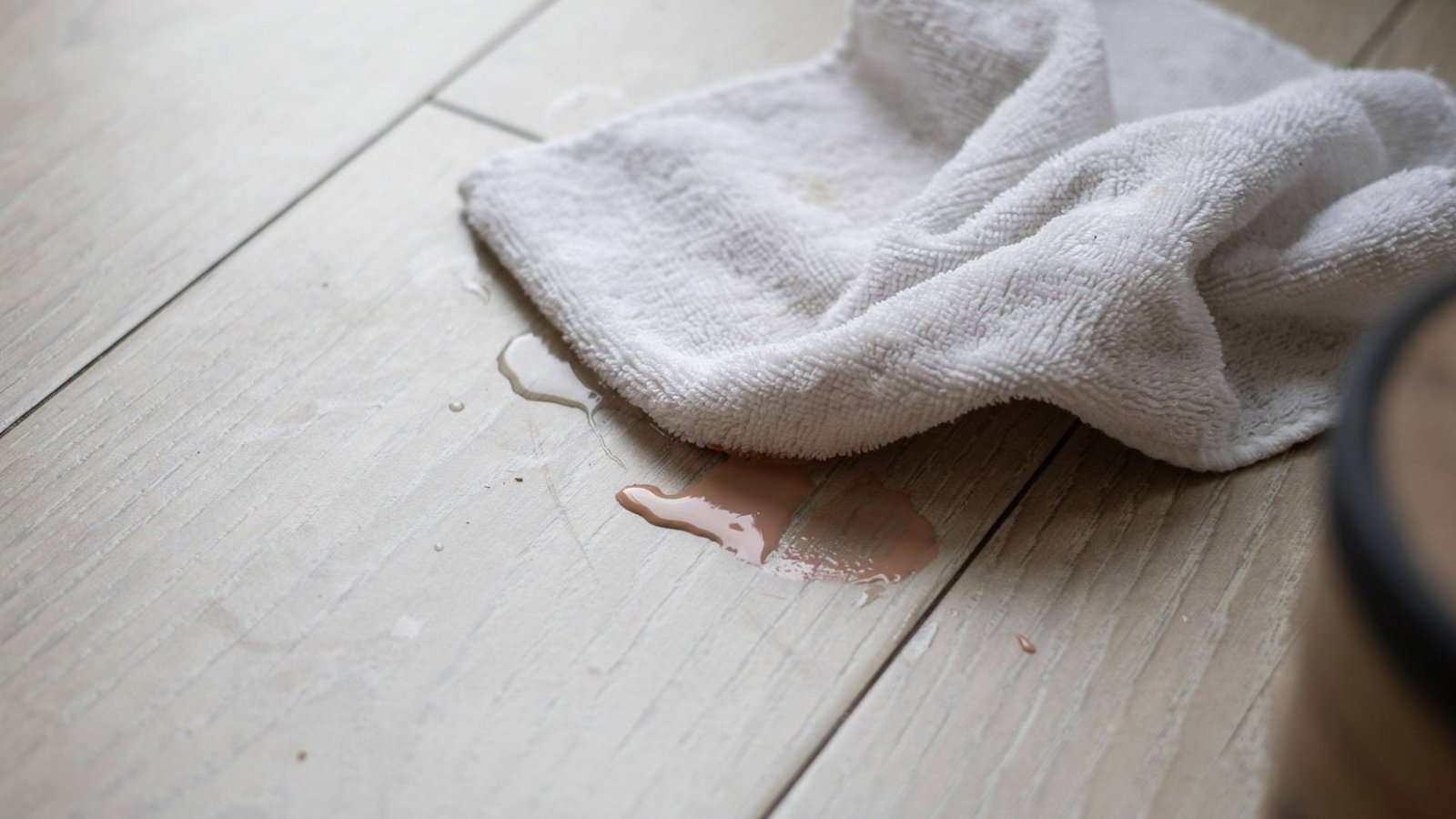
Wet paint is much easier to lift than dry paint. Press a warm, damp cloth onto the painted area and let it sit for a few minutes. This loosens the paint from the floor surface.
For dried paint, leave the damp cloth on longer. Adding a little dish soap to the warm water can help break the paint down faster.
Gently Scrape Away Loose Paint
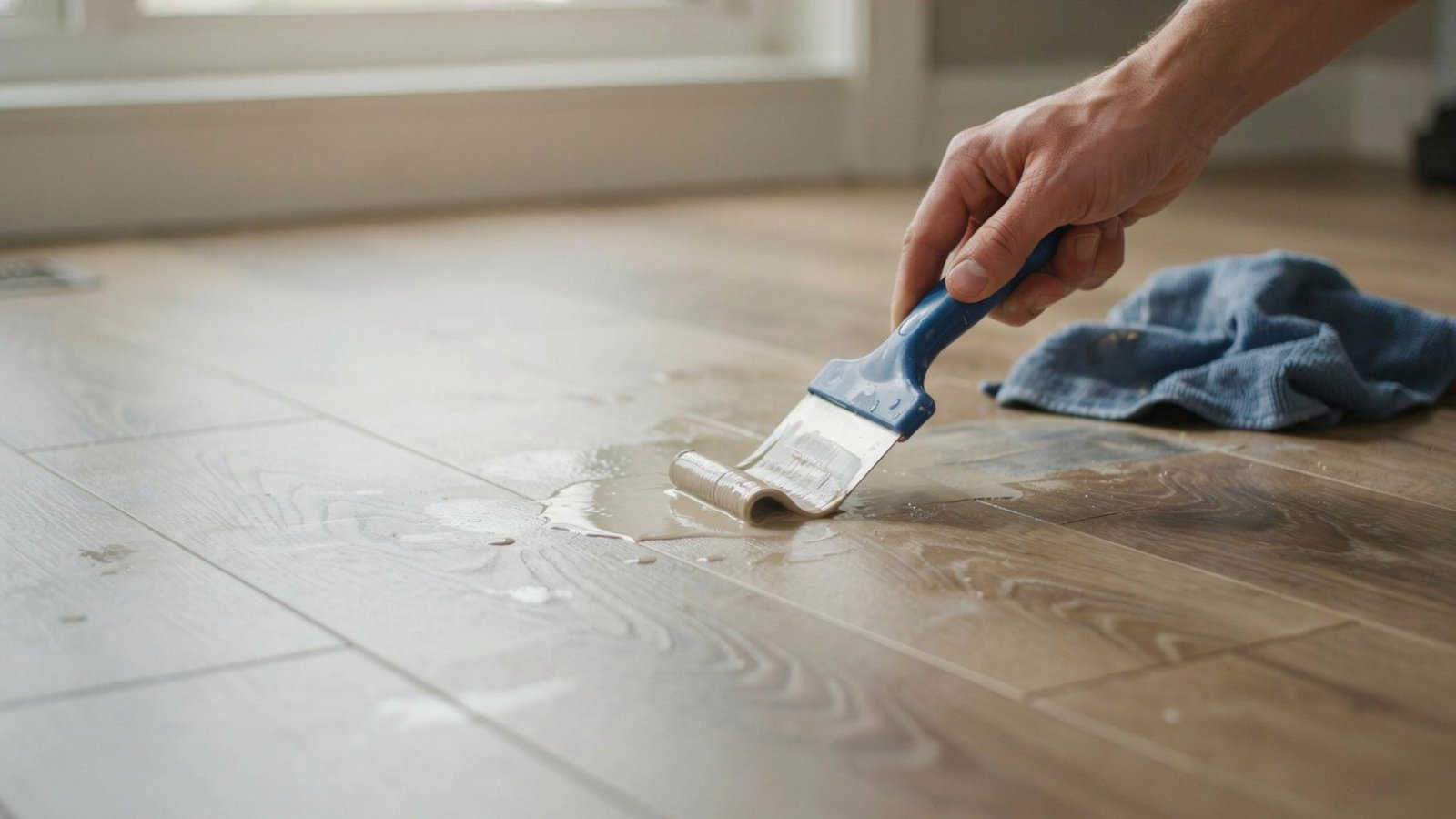
Use a plastic scraper or an old plastic card. Hold it at a low angle and push slowly under the paint. Do not press hard. If the paint is not lifting, re-wet the area and try again.
Clean and Wipe the Surface
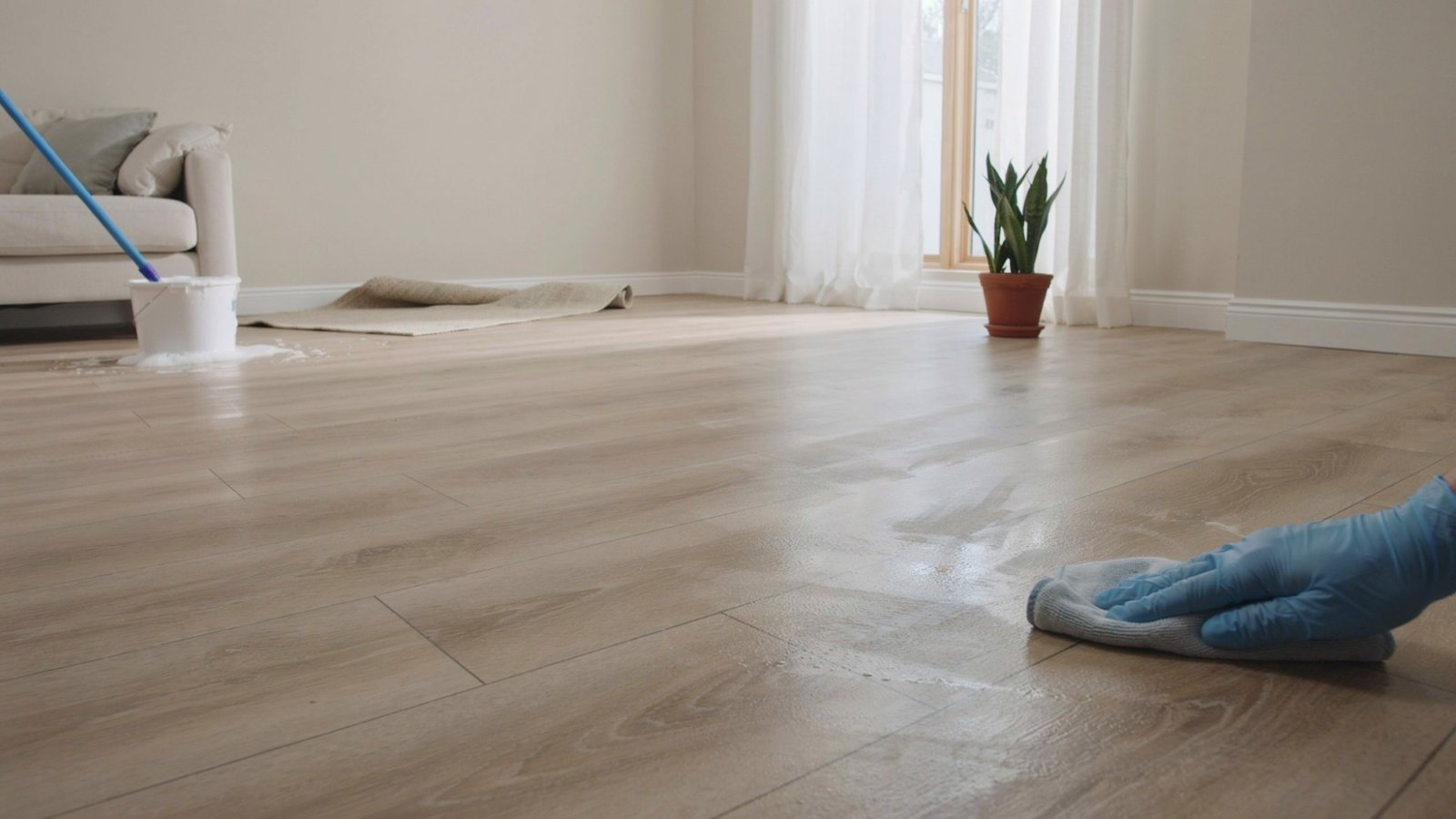
After scraping, wipe the area with a damp soapy cloth using circular motions. Rinse and wipe again to remove any leftover cleaner.
Dry the floor fully when done. Standing water in the seams can cause damage over time.
Best Methods That Actually Work for Removing Paint
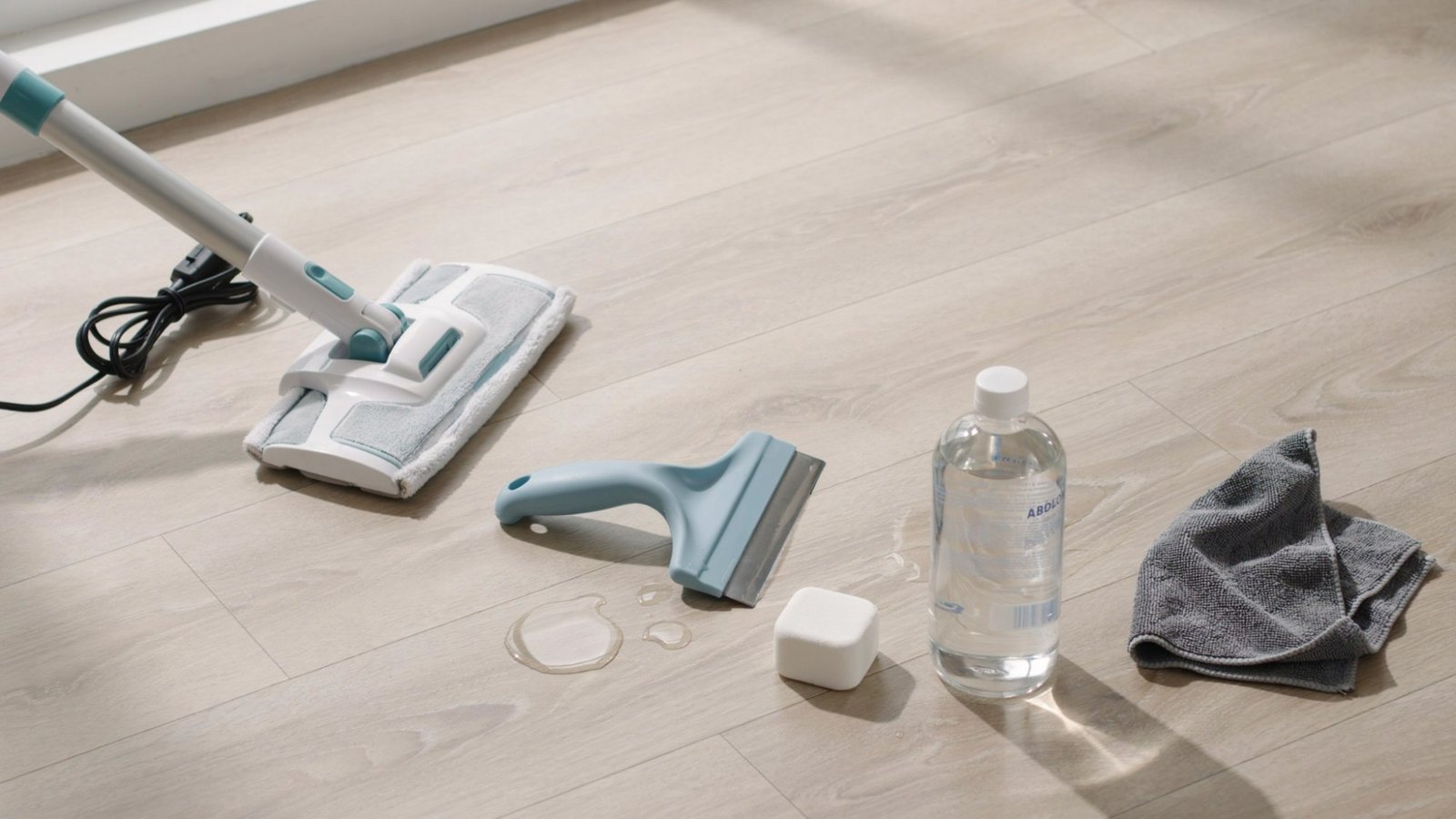
These methods are safe for vinyl and work well on both wet and dry paint with basic household items. The best method depends on the paint type and how long it has been sitting. Always start with the gentlest option first.
Warm Water and Damp Cloth Method
Soak a cloth in warm water and press it onto the paint for two to three minutes. Then wipe gently. This works best on fresh paint that has not fully dried.
Plastic Scraper Method
After softening the paint with water, slide a plastic scraper under the edge of the paint. Push forward with light pressure until the paint lifts off cleanly.
Steam Mop Method
Hold the steam head over the painted spot for about 30 seconds to soften it. Then wipe away with a cloth or plastic scraper. Do not leave steam in one spot too long as excess heat can warp vinyl.
Isopropyl Alcohol Method
Press a cloth soaked in rubbing alcohol onto dried paint and wait one to two minutes. Then scrub gently. Always test a hidden area first before applying it to the main spot.
Magic Eraser Method
Wet the eraser and rub it gently over light paint stains. Do not press too hard. Too much pressure can dull the vinyl surface.
How to Get Dried Paint Off Vinyl Floor
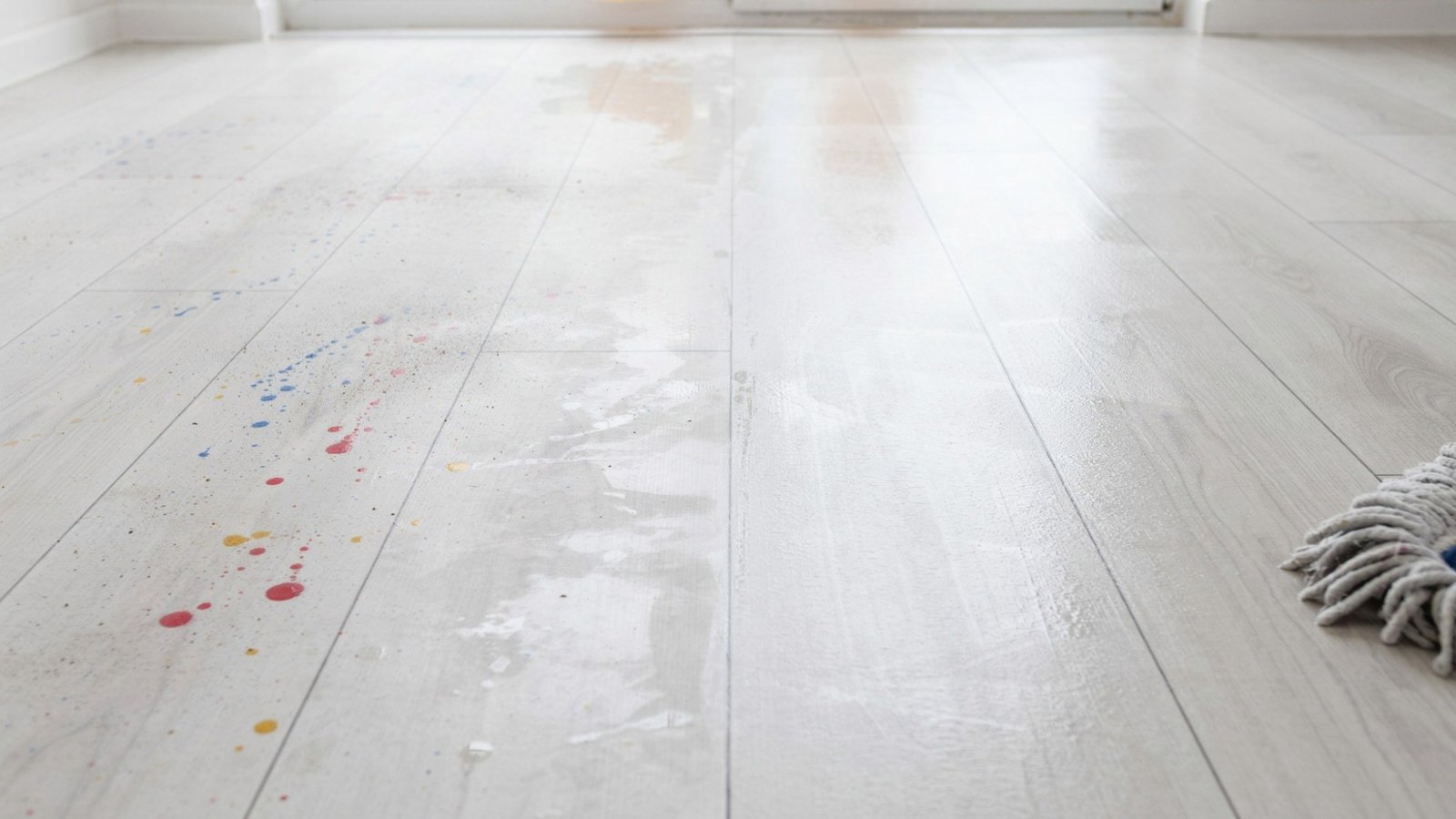
Dried paint needs more time and the right product to loosen properly before you attempt removal.
Removing Dried Latex Paint
Latex paint dries quickly but stays water-soluble. Soak the area with warm water and a little dish soap. Let it sit for five to ten minutes.
Then use a plastic scraper or a cloth to lift it off. Most of the paint should peel away without much effort.
Removing Dried Acrylic Paint
Acrylic paint bonds tighter than latex once it dries. Isopropyl alcohol works best here. Apply it with a cloth and let it soak in for a couple of minutes.
Then scrub in small circles. You may need to repeat this a few times for thick layers.
Removing Paint Splatters and Drips
Small drips and splatters are easier to handle once you know the paint type. Soften them first with warm water or alcohol.
Then use a plastic scraper to flick them off the surface. Work carefully so you do not spread the paint further.
Removing Stubborn Gloss Paint
Gloss paint is oil-based and harder to remove. A cloth soaked in warm soapy water may not be enough on its own.
Try rubbing alcohol or a commercial vinyl-safe cleaner. Apply it, wait a few minutes, and then scrape gently.
Avoid any solvent that is not labeled safe for vinyl floors.
How to Get Paint Off Vinyl Floor Tiles
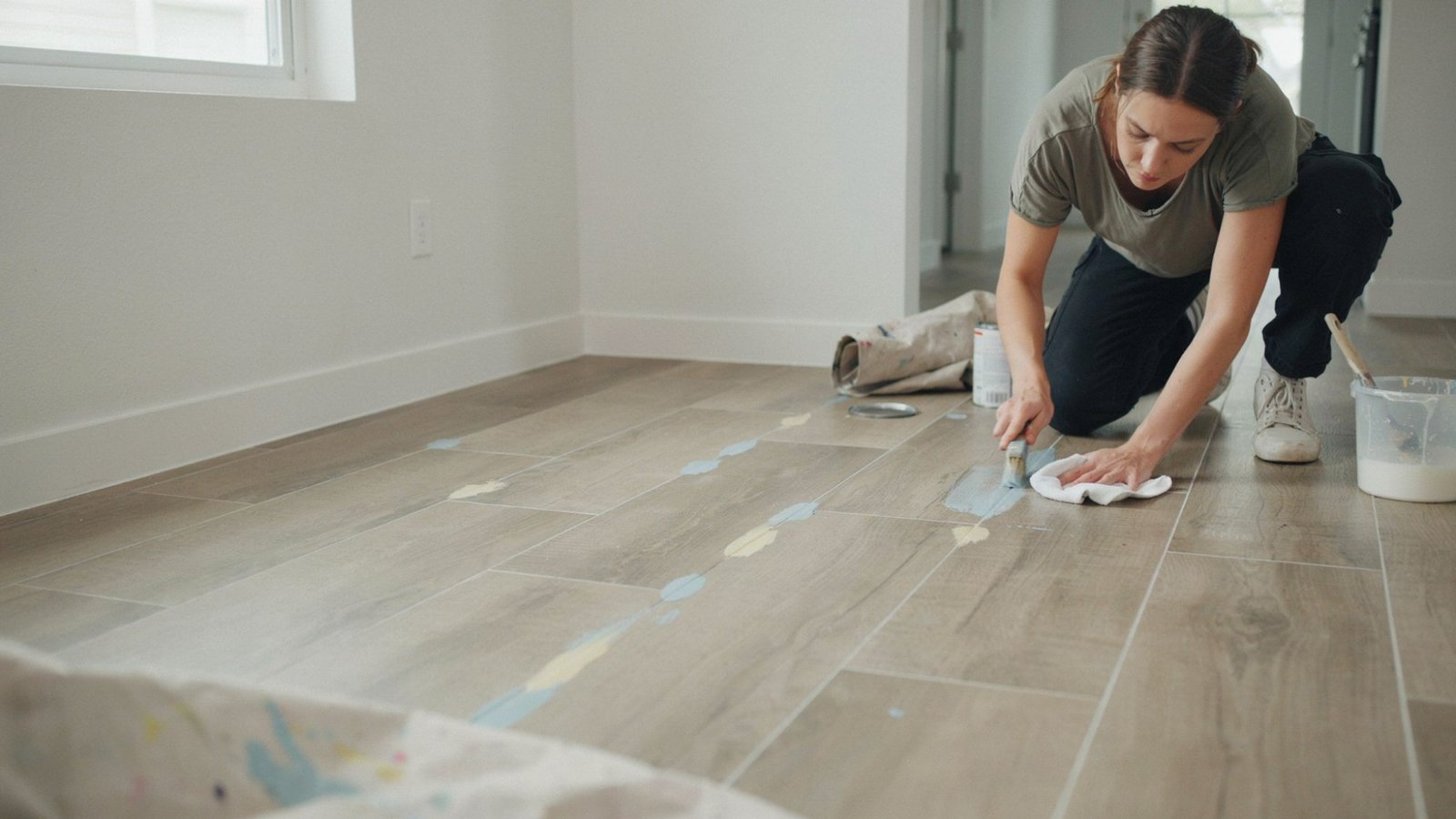
Vinyl tiles need extra care around seams and textured spots where paint can settle and stick deeper. Vinyl tiles have edges and seams where paint can get trapped. These areas need a little more attention than flat sheet vinyl.
Removing Paint From Textured Vinyl Tiles
A damp cloth may not reach paint sitting in small grooves. After softening the paint, use a soft-bristle brush or old toothbrush. Scrub lightly in the direction of the texture to pull the paint out.
Cleaning Paint From Edges and Seams
Use a cotton swab dipped in rubbing alcohol to clean narrow gaps between tiles. Be gentle to avoid loosening the tile edges or damaging the adhesive underneath.
Wipe the area dry after cleaning since moisture in the seams can weaken tiles over time.
Preventing Scratches on Vinyl Tiles
Only use plastic tools on vinyl tiles. Metal scrapers, wire brushes, and rough scouring pads can leave scratches that dull the surface.
Work slowly in small sections for better control and to avoid damaging the surrounding areas.
Common Mistakes That Can Damage Vinyl Flooring
Most vinyl floor damage during paint removal comes from common mistakes. These are easy to avoid once you know about them.
Using the Wrong Cleaning Products
Many all-purpose cleaners contain chemicals that are too strong for vinyl. Bleach, ammonia-based cleaners, and abrasive powders should never be used on vinyl floors.
Always check the label and use products made for vinyl surfaces.
Applying Too Much Force
More pressure does not mean faster results. Pressing down hard with a scraper or scrubbing pad can scratch or gouge the vinyl.
Use light, steady pressure instead and let the product do the work.
Leaving Paint to Cure for Too Long
Fresh paint is always easier to remove than fully cured paint. The longer you wait, the harder it bonds to the surface.
Try to clean up paint spills as soon as you spot them, even if it is just a quick first pass.
Tips for Removing Paint Faster and Easier
Here are some simple tips to get better results with less effort:
- Always work on one small section at a time. This stops the paint from spreading and makes it easier to track what has been cleaned.
- Keep a bowl of warm water nearby and re-wet the painted area as needed. Moist paint is much easier to scrape and wipe away.
- Test any cleaner on a small hidden spot before applying it to the main area. Wait a few minutes to check for dullness or discoloration first.
- Do not let the area dry out while you are working. If the paint starts to harden again, add more water before continuing.
- Clean up paint spills as soon as they happen. Fresh paint is always easier to remove than paint that has had time to dry and bond to the surface.
Conclusion
Getting paint off vinyl floors is not as scary as it looks. I have seen people panic over a few paint drips, but with the right tools and a little patience, it comes off cleanly.
Start gently, work slowly, and you will be surprised at the results.
Have you tried any of these methods? Did something work better for you? Drop a comment below and let us know. If this helped, share it with someone tackling a paint mess right now!
Frequently Asked Questions
Does vinegar remove paint from vinyl floors?
Yes, warm white vinegar can help loosen fresh paint from vinyl floors. Apply it with a cloth, wait a few minutes, and wipe gently.
Is rubbing alcohol safe to use on vinyl floors?
Rubbing alcohol is generally safe for vinyl floors when used in small amounts. Always test a hidden spot first before applying it to a visible area.
Can I use a razor blade to scrape paint off vinyl flooring?
Razor blades are too sharp for vinyl and can leave permanent scratches. Always use a plastic scraper instead to keep the surface safe.
How long should I let water sit on dried paint before scraping?
Let the warm damp cloth sit on dried paint for at least five to ten minutes. This gives the moisture enough time to soften the paint properly.
Will paint remover damage vinyl flooring?
Most chemical paint removers are too harsh for vinyl and can strip the finish or cause discoloration. Stick to gentle options like rubbing alcohol or warm soapy water instead.