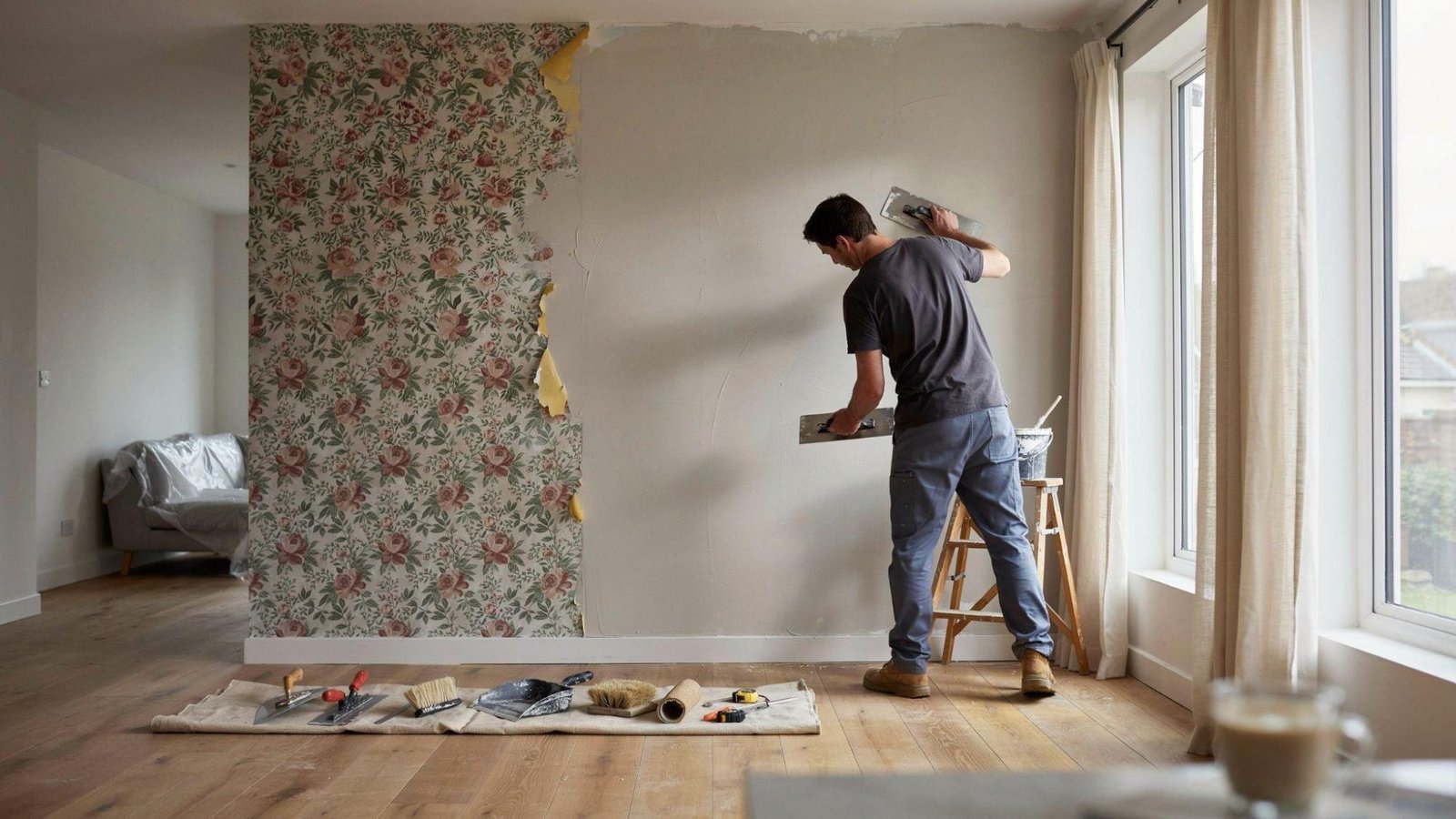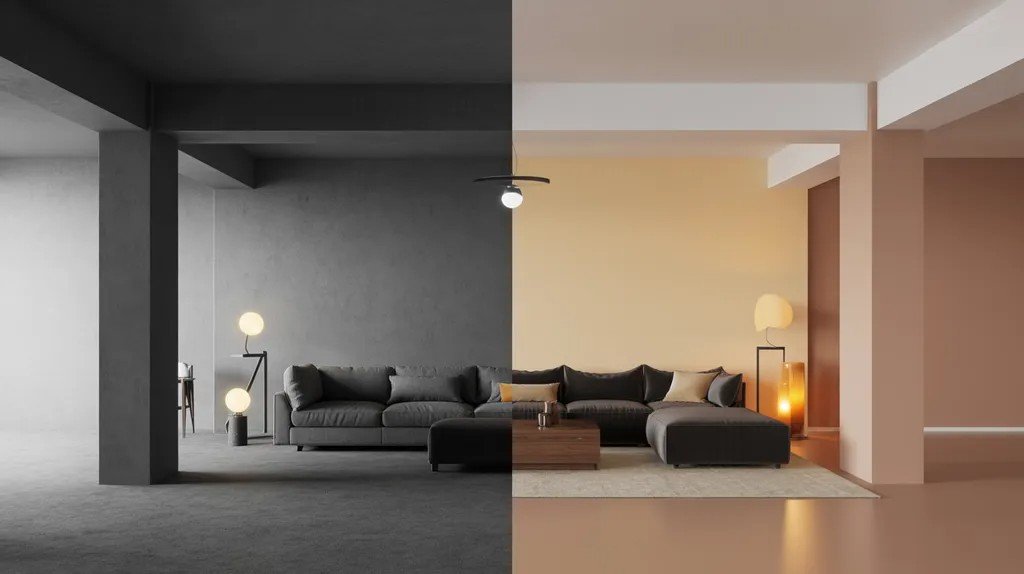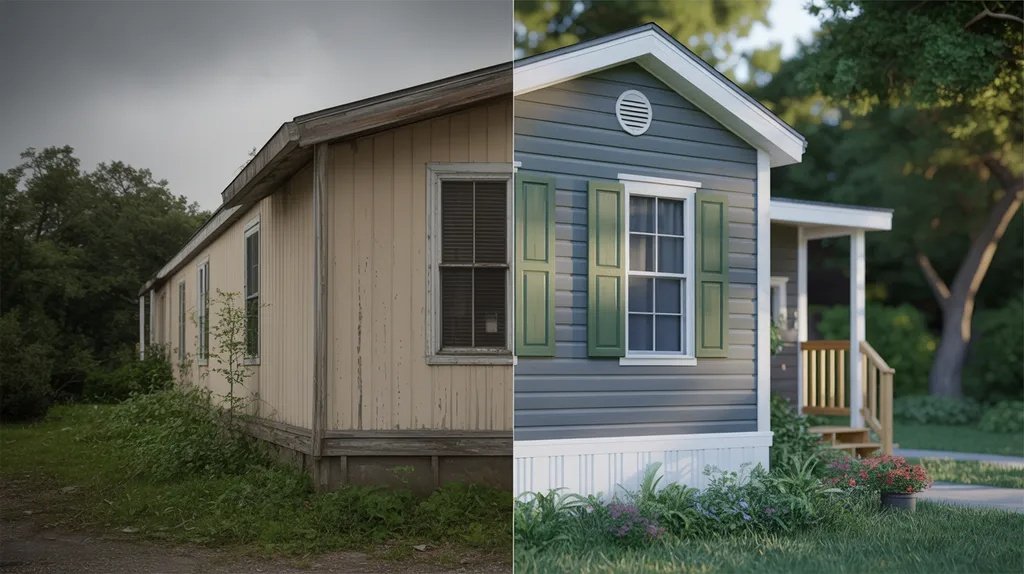
So you're standing in the paint aisle, staring at two cans that look almost the same. Ceiling paint vs wall paint, does it actually matter which one you grab?
It does, and I've made the mistake of skipping this step before.
This guide breaks down the real differences in finish, thickness, durability, and cost. You'll learn why the same color can look different on a ceiling than on a wall.
We'll also cover whether you can swap one paint for the other, and how to choose the right option for your room.
By the end, you won't be guessing in the store anymore. You'll know exactly what to buy and why.
What Is the Difference Between Ceiling Paint and Wall Paint?
Ceiling paint and wall paint look alike but do different jobs. Using the wrong one can mean drips, uneven coverage, or a finish that doesn't last.
Ceiling paint is thicker, so it stays in place instead of dripping. Wall paint is thinner and spreads more easily on vertical surfaces.
Ceiling paint usually has a flat finish that hides flaws and stains well. Wall paint comes in finishes like eggshell, satin, or semi-gloss for more choice.
Many ceiling paints include stain blockers, covering water marks or smoke stains without extra primer.
Wall paint rarely has this unless it's a paint-and-primer combo. Ceiling paint also cuts glare, keeping the room feeling balanced.
Glossier wall paint reflects more light and adds depth instead.
Since ceiling paint resists splattering, it's better for overhead use. Wall paint can drip more if used on a ceiling.
Walls get touched and cleaned often, so wall paint handles scrubbing well. Ceilings see less contact, so ceiling paint focuses on smooth, even coverage.
In short, ceiling paint hides flaws better, while wall paint offers more finish options and handles wear. Picking the right one saves rework later.
Ceiling Paint vs Wall Paint Differences
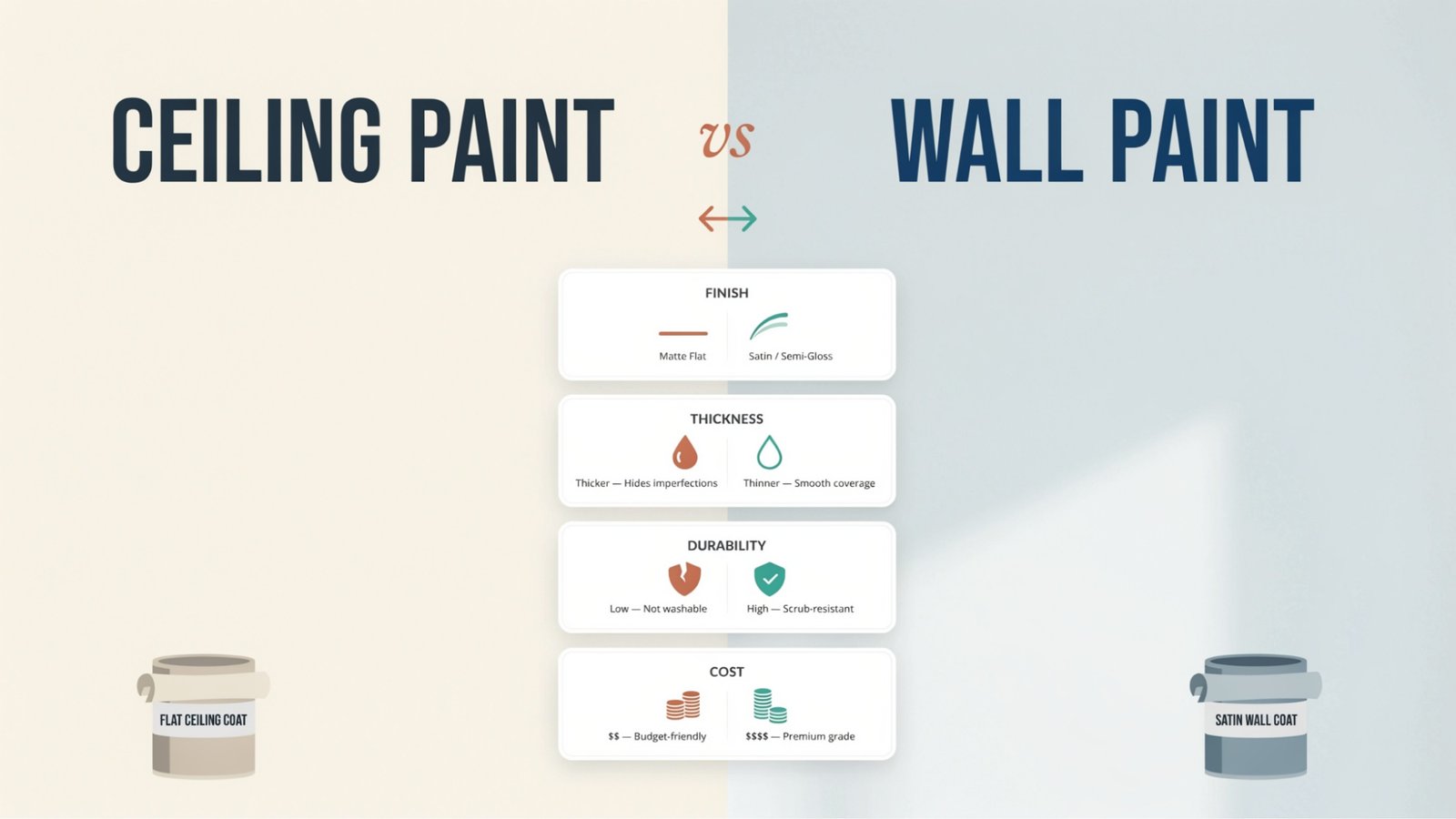
A side-by-side look at how these two paint types differ in texture, durability, coverage, and cost before you buy either one.
| Feature | Ceiling Paint | Wall Paint |
| Finish | Flat or matte, hides flaws | Matte to gloss, more options |
| Consistency | Thicker, resists drips | Thinner, spreads evenly |
| Durability | Not built for contact | Holds up to scrubbing |
| Coats Needed | Usually one coat | Often two coats |
| Stain Resistance | Minimal | Built-in stain resistance |
| Cost | Lower | Higher |
Ceiling Paint vs Wall Paint Color: Does the Same Color Look Different?
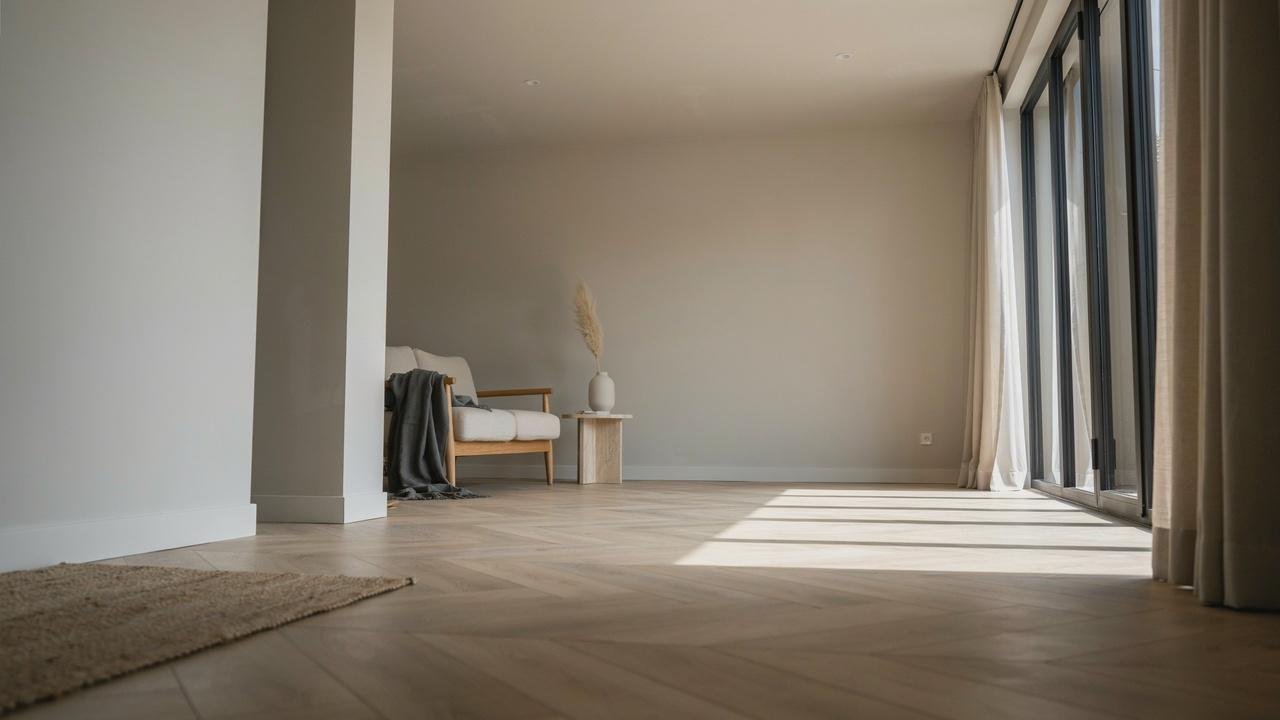
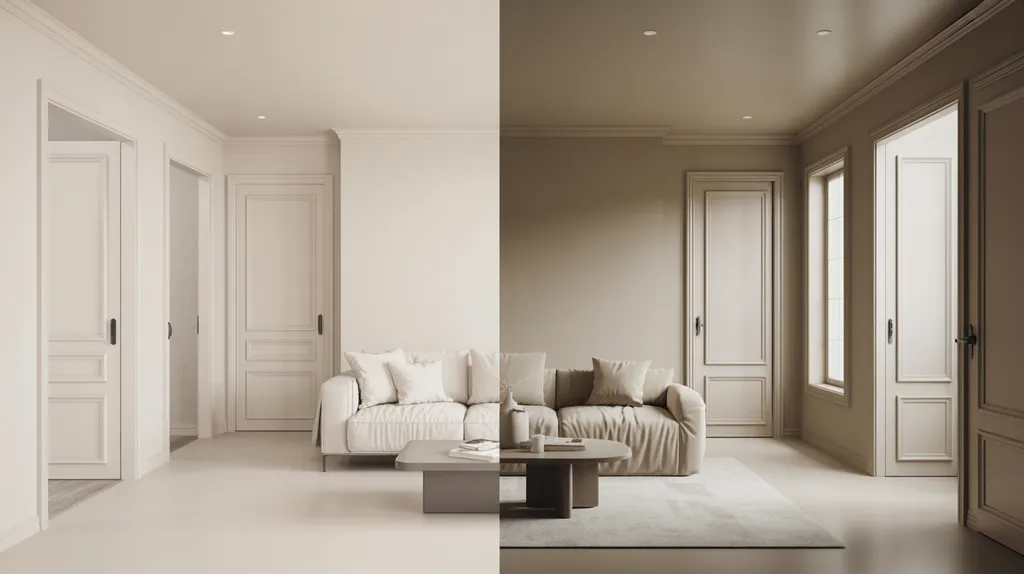
The same paint color can look noticeably different on a ceiling than on a wall due to lighting, angle, and finish. Yes, it can.
The same can of paint often looks like two different shades once it dries on each surface. This isn't a flaw, it comes down to how light hits each one.
How Lighting Affects Ceiling and Wall Paint
Walls catch direct light from windows. Ceilings only get light at an angle. This changes how the eye reads the color, so a pale blue wall might look almost white on the ceiling.
Why Ceiling Paint Usually Looks Different From Wall Paint
The ceiling paint's flat finish absorbs light. Wall paint, especially in satin or semi-gloss, reflects more light back. This makes the same color read lighter or darker depending on where it's applied.
Does Paint Finish Affect Color Appearance?
Yes. Glossier finishes make color look more vivid since they reflect more light. Flat finishes soften and mute the color.
Should Ceilings and Walls Be the Same Color?
Not necessarily. A lighter ceiling shade keeps a room feeling open. Some homeowners match colors on purpose for a cohesive look, especially in smaller rooms. Both approaches work..
Why Ceiling Paint and Wall Paint Are Made Differently

A look at the formula differences behind ceiling paint and wall paint, and why each one is built for a specific purpose.
These two products aren't made from the same recipe. Each one is built with a different surface and a different daily reality in mind.
Ceiling Paint Is Designed to Hide Imperfections
Ceilings often have small cracks, patches, or uneven texture from past repairs. Ceiling paint's thicker, flat formula helps mask these flaws instead of drawing attention to them.
Wall Paint Is Made for Durability and Cleaning
Walls deal with fingerprints, furniture bumps, and general household wear. Wall paint includes binders and additives that help it hold up to scrubbing and daily contact.
How Paint Formulas Affect Performance
The resin, additives, and pigment levels in each paint type are adjusted for their intended surface.
This is why swapping one for the other doesn't always give good results, even if the color looks identical on the swatch.
Can You Use Ceiling Paint on Walls?
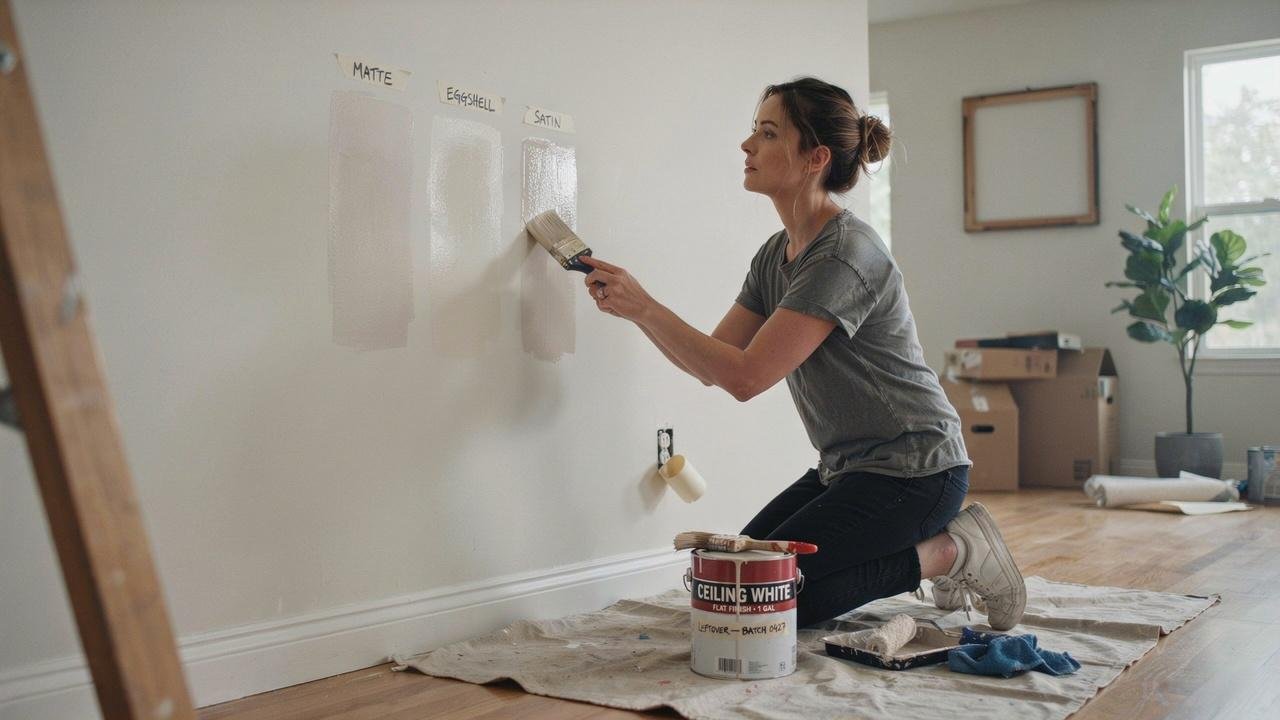
It's possible, but ceiling paint lacks some of the durability and washability that wall paint offers for high-touch areas.
Ceiling paint can hide minor wall imperfections well, thanks to its thicker formula, and it can be a budget-friendly option if you already have extra on hand.
That said, it won't hold up to scrubbing or heavy contact as well as wall paint, so marks and scuffs can be harder to clean off over time.
It works fine in low-traffic spaces like a closet, a storage room, or an accent wall. For busy areas like hallways or kitchens, wall paint is still the better call.
Can You Use Wall Paint on Ceilings?
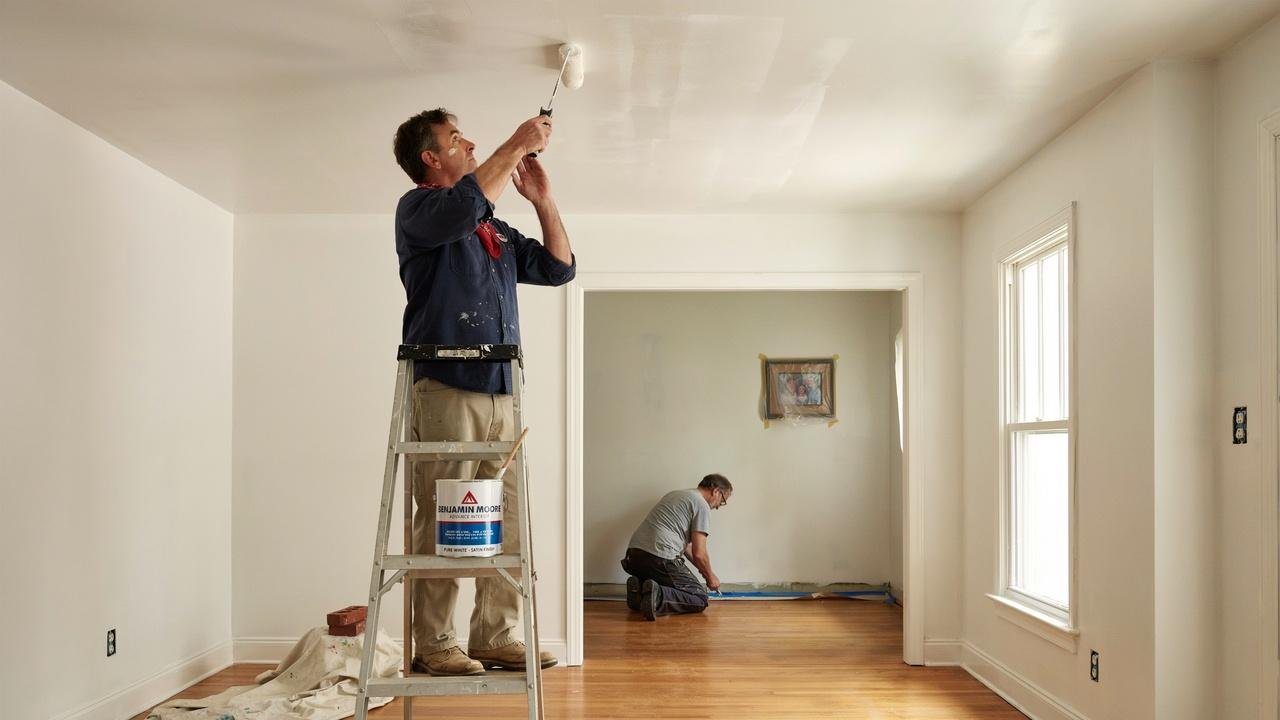
Wall paint can technically go on a ceiling, but it may show roller marks and reflect light in ways that highlight surface flaws.
Wall paint's thinner consistency can drip or sag when applied overhead, and it may need more coats than ceiling paint for full coverage.
If it has any sheen, it can reflect light at an angle that makes roller marks and small dips more noticeable.
A flat or matte wall paint can still work in a pinch if the ceiling is in good shape with no major flaws to hide. It's not the ideal choice, but it's not a disaster either.
How to Choose Between Ceiling Paint and Wall Paint
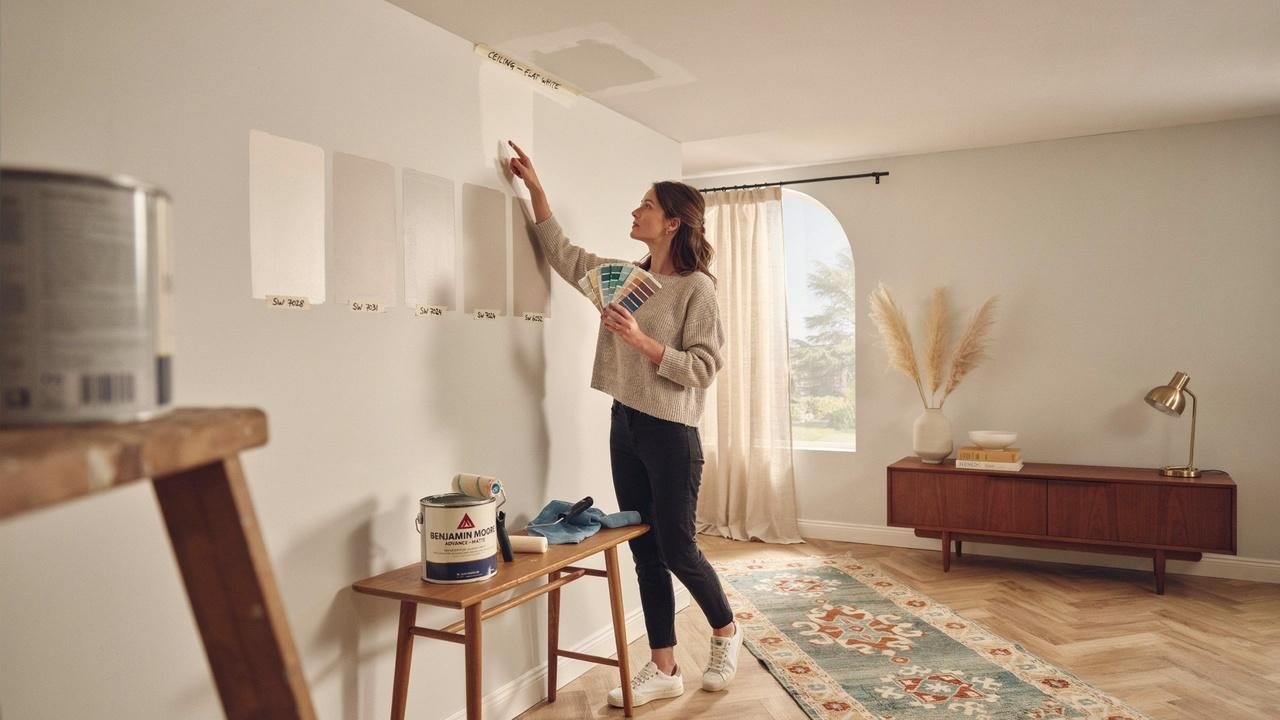
A simple guide to picking the right paint type based on your room, lighting, finish needs, and overall style goals.
Consider the Room and Lighting
High-traffic rooms like kitchens and bathrooms benefit from wall paint with strong stain resistance, while bedrooms and low-traffic spaces have more flexibility.
Rooms with lots of natural light may need slightly different shades for ceilings and walls to avoid an odd color shift once the paint dries.
Choose the Right Finish for Cleaning Needs
Flat finishes work well for ceilings and low-traffic walls. Satin or semi-gloss finishes suit walls in kitchens, bathrooms, or kids' rooms where cleaning matters more.
If a wall gets touched often, go with a paint built for washability, since ceilings rarely need that level of durability.
Match the Paint to Your Interior Style
Lighter ceilings can make a room feel taller, while bold ceiling colors can add personality to a space. Pick a combination that fits the mood you want for the room.
Tips for Painting Ceilings and Walls Like a Pro
A few practical pointers to help you get a clean, even finish whether you're painting a ceiling, a wall, or both.
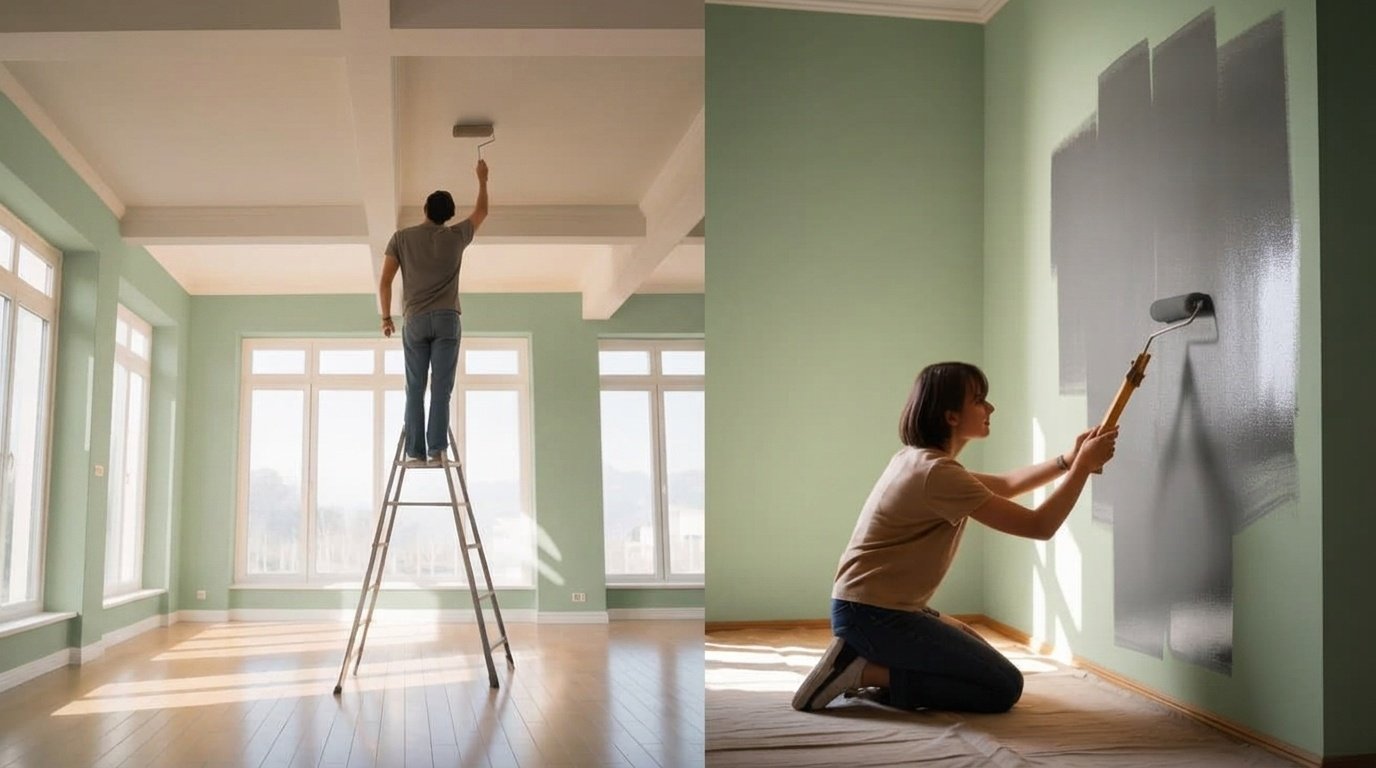
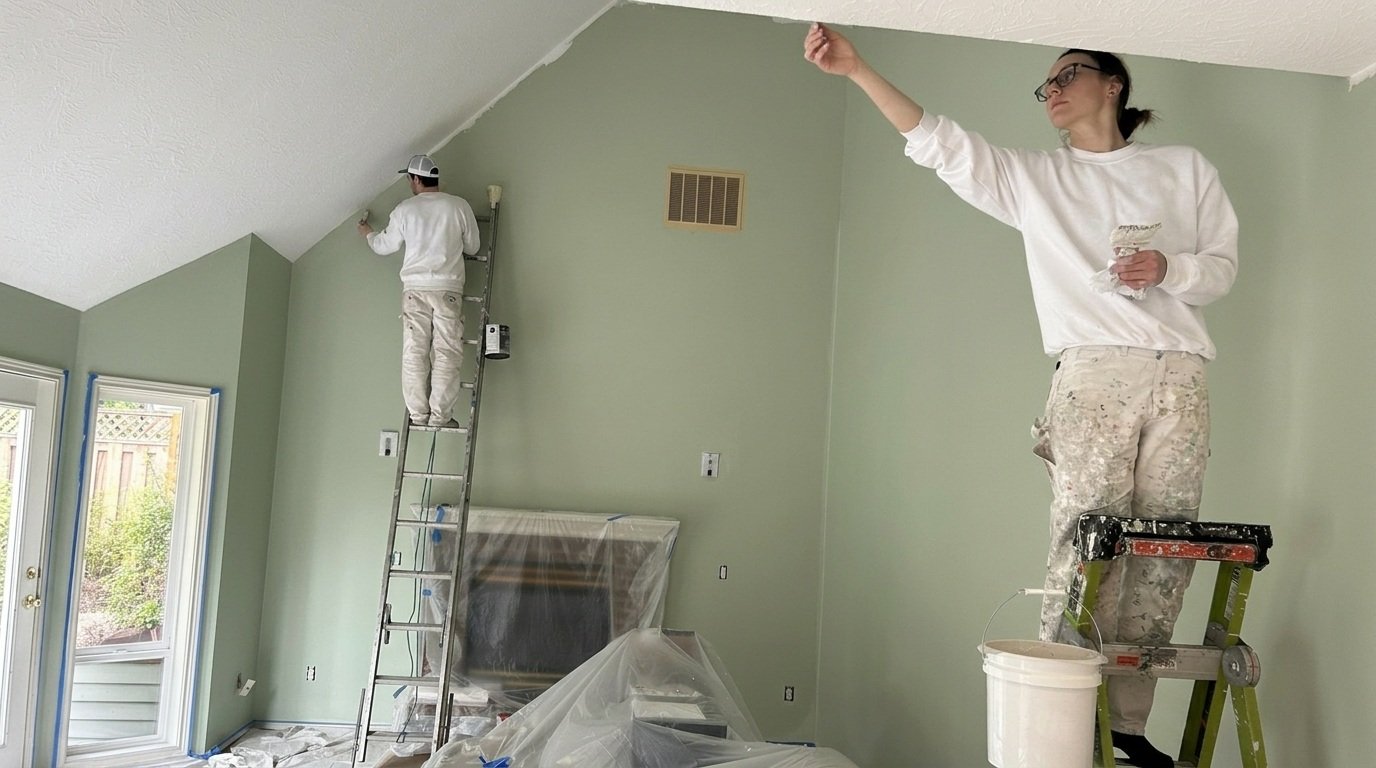
- Paint the ceiling before the walls. Any drips or splatter will land on the floor or walls, which you'll paint over next anyway.
- Use the right roller and brushes. A thicker nap roller works well for textured ceilings, while a medium nap roller gives walls a smoother, more even coat.
- Test paint colors before committing. Paint a small section and check it at different times of day, since lighting changes how a color looks.
- Apply thin and even coats. Thick, heavy coats can lead to drips, sagging, or uneven drying. Two thin coats almost always look better than one thick one.
- Use painter's tape for clean edges. Tape off trim, corners, and the line where the ceiling meets the wall to keep edges sharp and save time on cleanup later.
Conclusion
I learned this the hard way after rolling leftover ceiling paint onto an accent wall and wondering why it looked flat and lifeless under the lamp. Now I always match the paint to the surface first.
So before your next project, take a minute to think about which one you actually need: ceiling paint vs wall paint. It makes a real difference once the roller comes out.
Got a painting story of your own? Drop it in the comments, or pass this along to a friend who's about to start a project.
Frequently Asked Questions
What's the main difference between ceiling paint and wall paint?
Ceiling paint is thicker with a flat finish to hide flaws and resist drips overhead. Wall paint is thinner, comes in more finishes, and holds up better to cleaning and contact.
Can I use the same paint color on my ceiling and walls?
Yes, but the same color often looks different on each surface due to lighting and finish. Many people choose a slightly lighter shade for the ceiling to keep the room feeling open.
Is it okay to use leftover wall paint on a ceiling?
A flat or matte wall paint can work if the ceiling is in good condition. It may need extra coats and could show roller marks more than ceiling paint would.
Why does ceiling paint usually come in flat finish only?
A flat finish absorbs light instead of reflecting it, which helps hide small cracks, patches, or uneven texture common on ceilings. It also keeps glare to a minimum.
Does ceiling paint cost less than wall paint?
Yes, ceiling paint is generally cheaper since it has fewer additives and a simpler formula. Wall paint costs more due to its added durability and stain resistance.