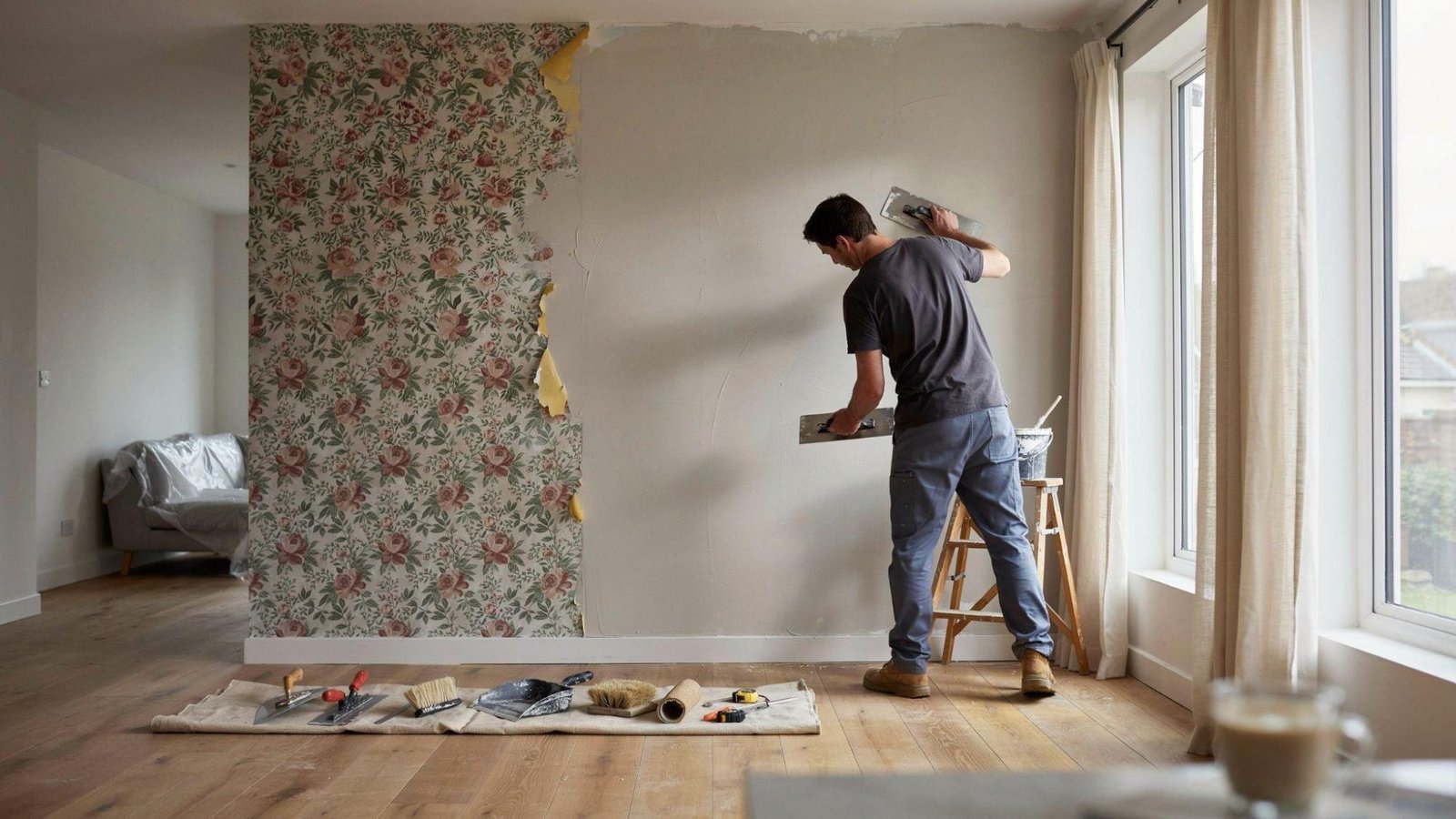
Stripping wallpaper is messy, time-consuming, and can wreck the drywall underneath. So I get why so many people ask if they can just skim coat over it instead.
The honest answer? Sometimes yes, sometimes no.
I have worked on walls where skim coating over wallpaper came out perfectly smooth.
I have also seen it go sideways fast when the prep was rushed or the wallpaper was not in good shape to begin with.
It all comes down to the condition of your wallpaper and how well you prep the surface.
In this guide, I will walk you through everything you need to know before you pick up that drywall knife.
Can You Skim Coat Over Wallpaper?
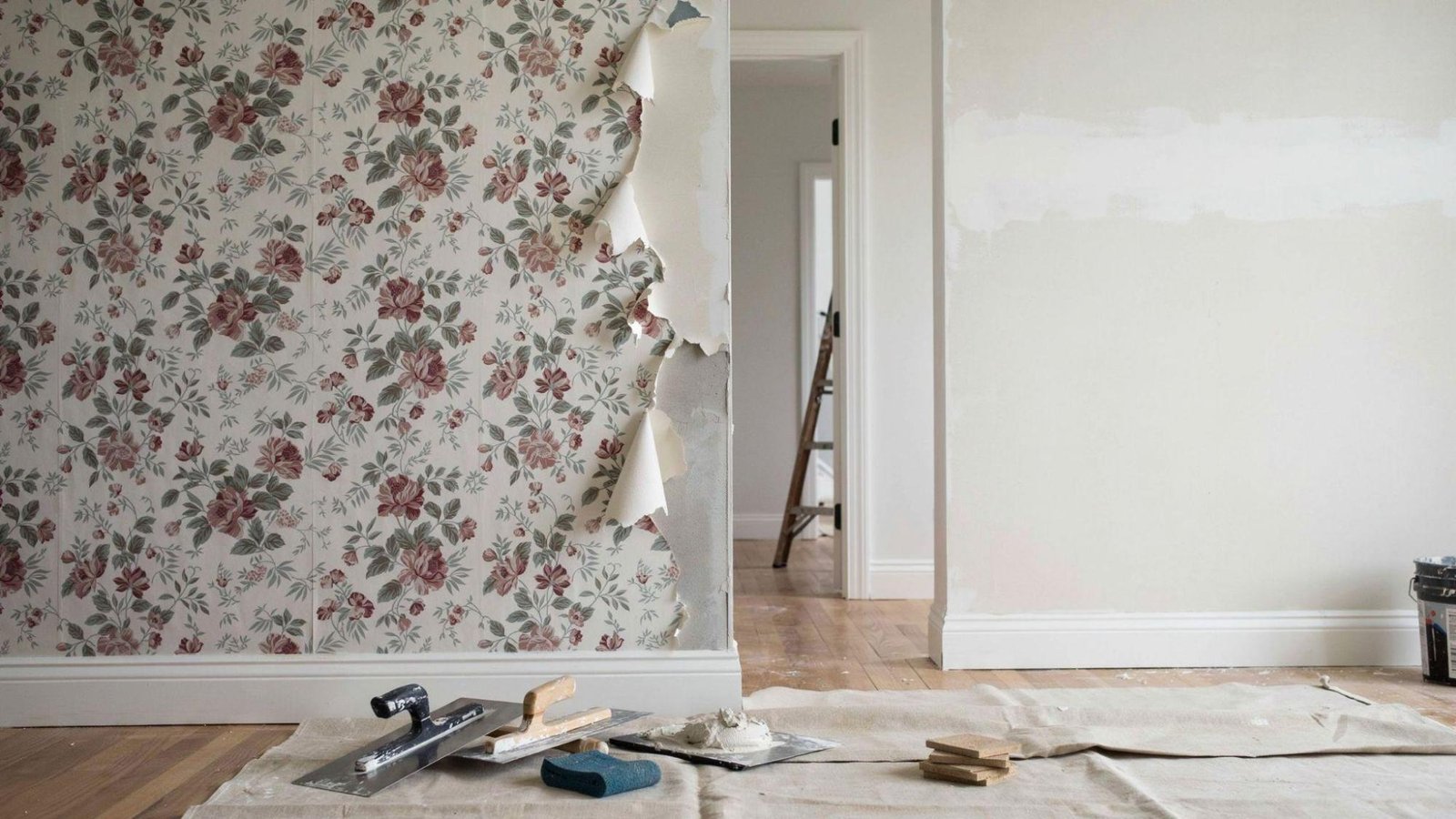
Yes, you can skim coat over wallpaper, but it is not always the right call.
It works best when the wallpaper is fully stuck to the wall, has no peeling edges, and the seams are flat.
If the paper is thin and well-bonded, a skim coat can give you a smooth finish without the mess of removal.
But if the wallpaper is bubbling, peeling, or layered over other paper, skip the skim coat. Removal is the better move in those cases.
What Happens If You Skim Coat Over Wallpaper?
Skim coat bonds to wallpaper through the joint compound gripping the paper's surface. It works when the wallpaper is clean, dry, and firmly attached to the wall.
Skipping removal saves time and avoids the risk of damaging drywall underneath. It also cuts down on dust, mess, and labor.
But the risks are real. Moisture from the compound can loosen wallpaper seams and cause bubbling.
If the paper was never well-bonded, the whole surface can fail. Long term, you may end up with cracks and uneven patches.
How to Tell If Your Wallpaper Is Suitable for Skim Coating
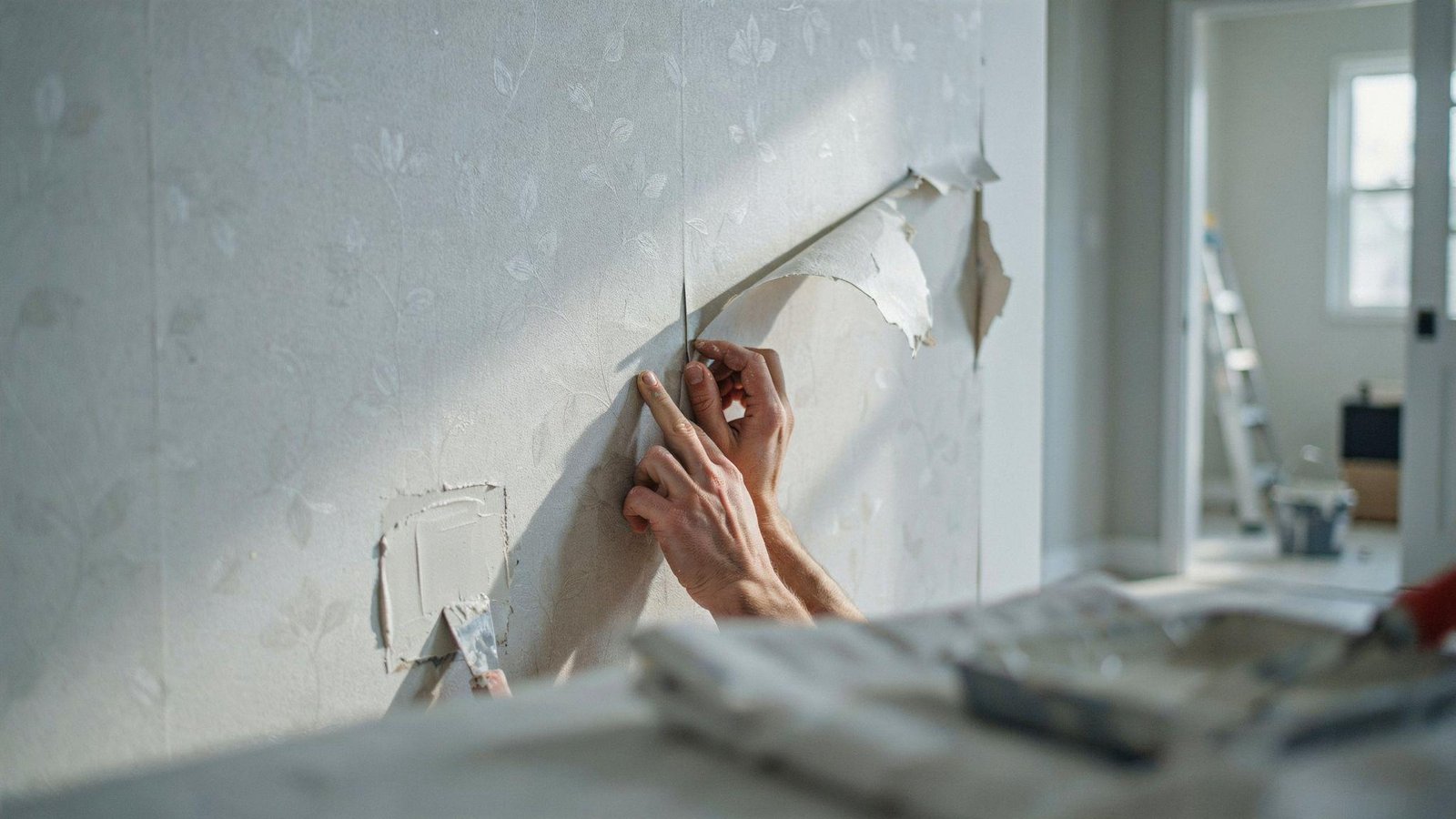
Not all wallpaper is ready for a skim coat. Here is how to check before you commit.
Check for Loose Seams and Edges
Run your hand along every seam and edge. If anything lifts or feels loose, press it down with seam repair adhesive first.
Loose edges will show through the skim coat and cause problems later.
Look for Bubbles, Peeling, and Water Damage
Bubbles and peeling spots mean the wallpaper is not fully bonded. Water damage makes it worse.
Skim coating over these areas will not hold. Fix or remove damaged sections before you start.
Identifying Vinyl vs. Paper Wallpaper
Vinyl wallpaper does not absorb moisture well, so skim coat may not stick properly. Paper wallpaper bonds better.
To check, wet a small corner. If water soaks in, it is paper. If it beads off, it is vinyl.
Testing Wallpaper Adhesion Before Starting
Press firmly on different wall sections and check for any movement or hollow sounds. You can also apply a small amount of joint compound to a test spot and let it dry.
If it peels off easily, the wallpaper needs to come down first.
Pros and Cons of Skim Coating Over Wallpaper
Skim coating over wallpaper has its upsides, but it comes with trade-offs too. Know both sides before you decide.
Advantages
- Saves you the time and effort of stripping wallpaper off the wall
- Lowers the risk of tearing or gouging the drywall underneath
- Can be the cheaper option when removal is too risky or labor-heavy
Disadvantages
- Moisture from the compound can cause peeling or bubbling over time
- Wallpaper seams can show through even after the skim coat dries
- If you ever want to repaper or repaint, removal becomes a much bigger job
Materials Needed to Skim Coat Over Wallpaper
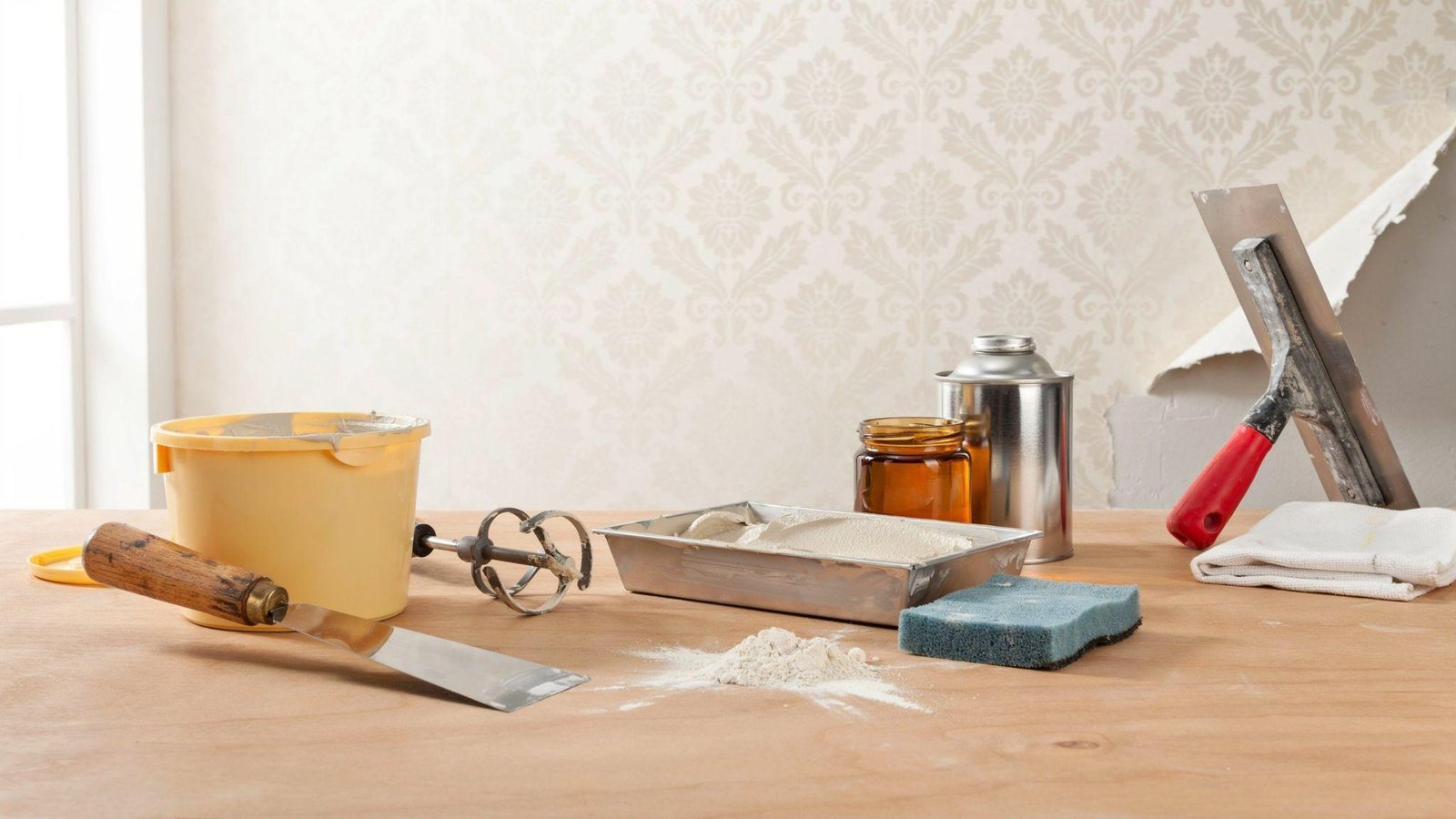
You will need a oil-based primer or shellac-based sealer to prep the wallpaper before anything else. This seals the surface and stops moisture from loosening the paper.
For the compound, use lightweight all-purpose joint compound. It spreads easily and dries without too much shrinkage.
As for tools, grab a wide drywall knife, a mud pan, a sanding sponge, and a corner trowel. A mixing drill attachment helps if you are working with a large batch.
How to Skim Coat Over Wallpaper Without Removing It
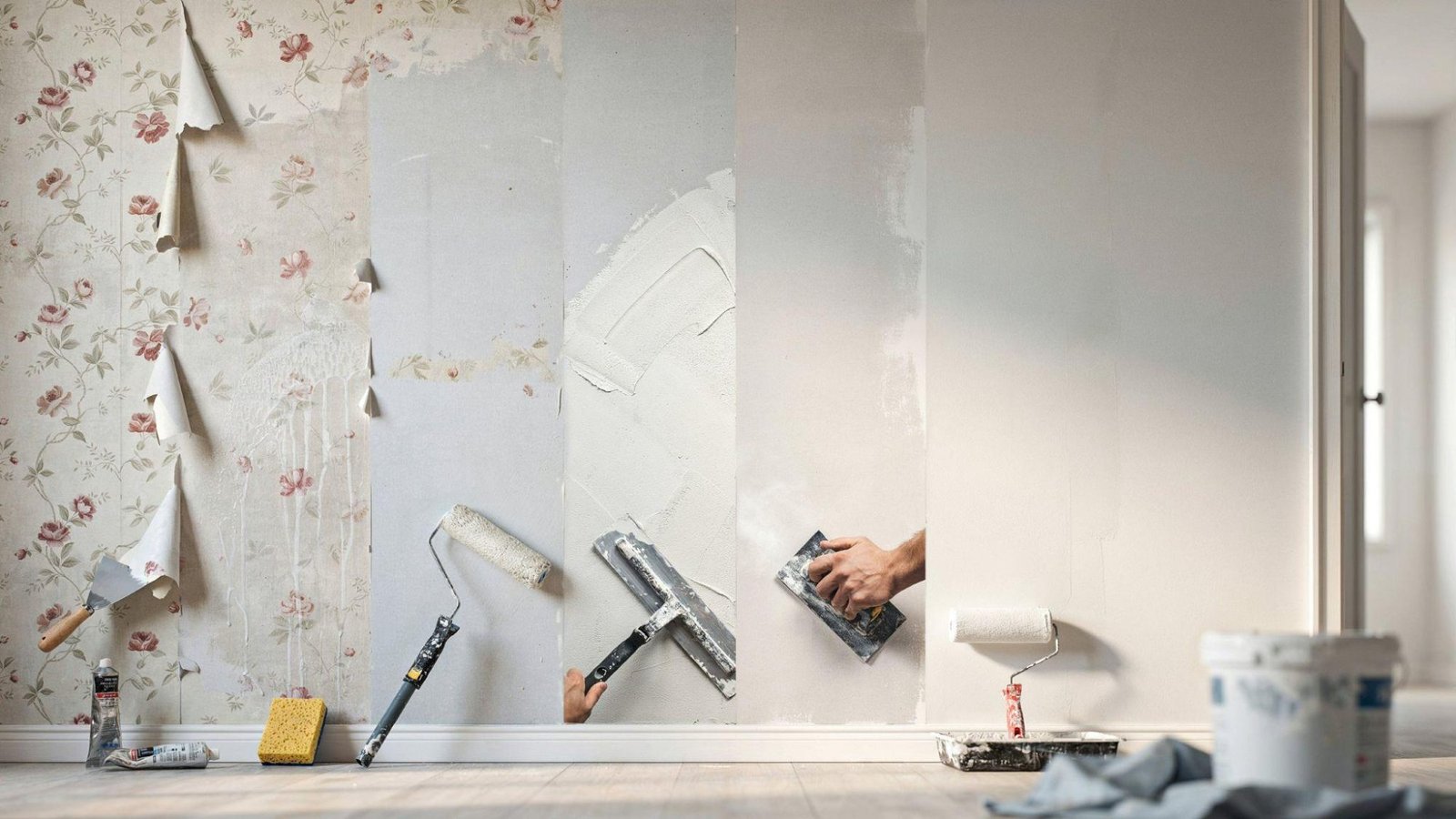
You do not need to rip down the wallpaper to get a smooth wall. Follow these steps and you can get a clean finish without the mess.
Step 1: Inspect and Repair the Wallpaper
Check every inch of the wall. Press down loose seams with adhesive and let it dry fully.
Fill any torn spots or gaps with joint compound. The wallpaper needs to be flat and firmly stuck before you move forward.
Step 2: Clean the Surface
Wipe the wall down with a damp cloth to remove dust, grease, and dirt.
Let it dry completely. Any residue left on the surface can stop the primer and compound from bonding properly to the wallpaper.
Step 3: Prime and Seal the Wallpaper
Apply an oil-based or shellac-based primer across the entire surface.
This seals the wallpaper and blocks moisture from the joint compound soaking in. Let it dry fully before moving to the next step.
Step 4: Apply the First Skim Coat
Use a wide drywall knife to spread a thin, even layer of joint compound across the wall.
Work in sections and keep the coat as smooth as possible. Do not apply it too thick or it will crack while drying.
Step 5: Sand and Inspect the Surface
Once the first coat is fully dry, sand it lightly with a sanding sponge.
Look for ridges, bubbles, or uneven spots. Wipe away dust with a dry cloth before deciding if a second coat is needed.
Step 6: Apply a Second Coat if Needed
If the surface still looks uneven after sanding, apply a second thin coat.
Feather the edges out smoothly. Let it dry completely, then sand again until the wall feels consistently smooth to the touch.
Step 7: Prime Before Painting
Once the final coat is dry and sanded, apply a fresh coat of drywall primer.
This seals the skim coat and gives your paint something solid to grip. Skip this step and your paint finish will likely look patchy.
Do Wallpaper Seams Need Special Treatment?
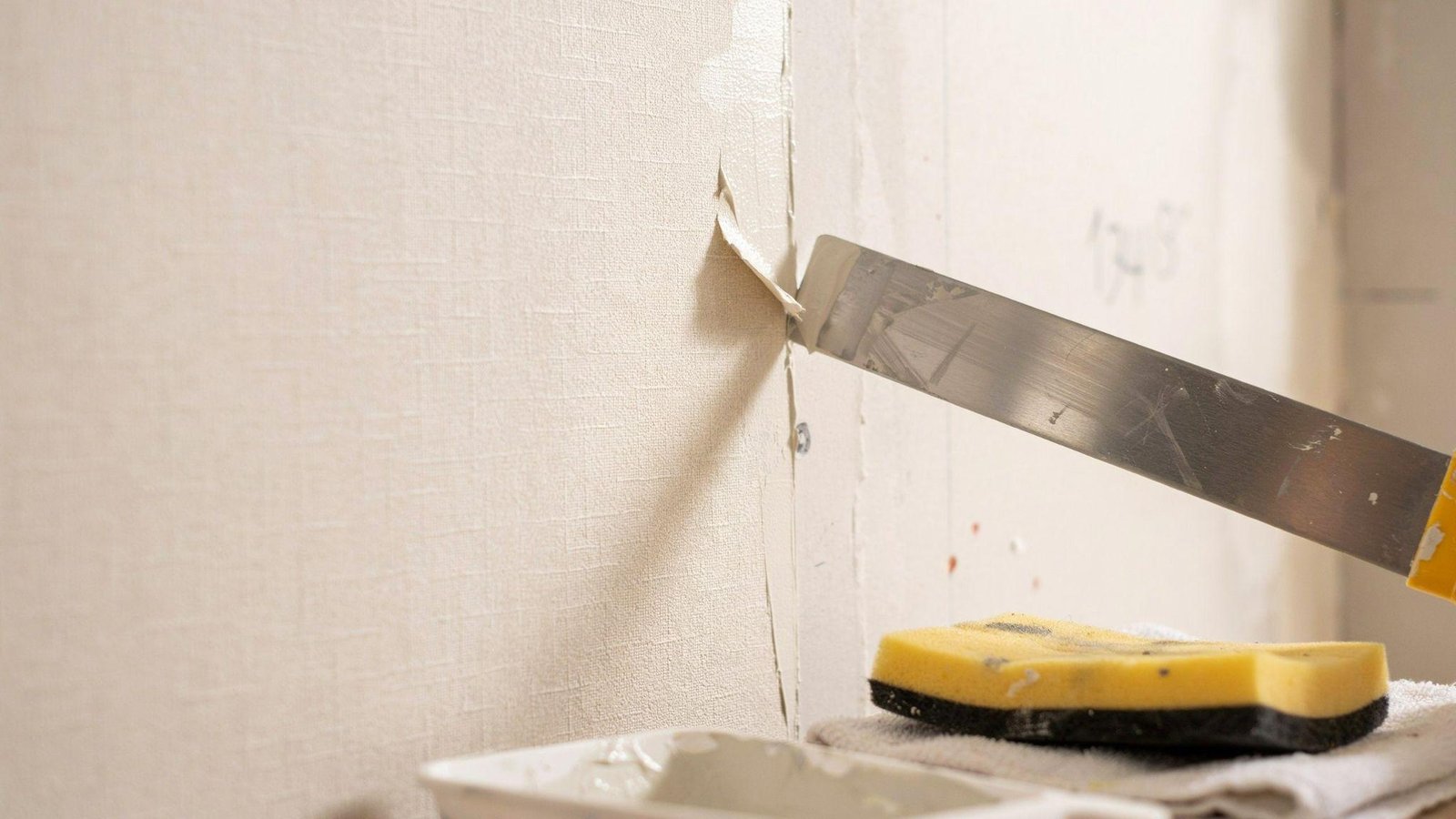
Loose seams need to come off or be re-glued before you do anything else. If a seam is lifting, pressing a skim coat over it will not fix it. It will just make the problem worse.
To feather visible seams, apply a thin layer of joint compound over the seam and blend it outward using a wide knife. Feather the edges so there is no hard line.
Once dry, sand it smooth. A good primer coat after sanding helps stop seams from showing through paint.
Common Problems When Skim Coating Over Wallpaper
- Bubbling after priming usually means moisture got into the wallpaper. Always use an oil-based or shellac primer to seal the surface before applying any compound.
- Cracking happens when the joint compound is applied too thick. Keep each coat thin and let it dry fully before adding another layer.
- Delamination occurs when the wallpaper was not properly bonded to begin with. Test adhesion before you start or you risk the whole surface coming away.
- Vinyl wallpaper resists moisture, which makes it hard for compound to stick. Scuff the surface lightly and use a strong bonding primer before skim coating.
- Uneven surfaces after drying are usually caused by rushed coats or skipping the sanding step. Sand between every coat and inspect the wall in good lighting before moving on.
Conclusion
Skim coating over wallpaper can work, but only when the conditions are right. I have seen it go smoothly when the paper is fully bonded, properly sealed, and treated with care at every step.
If the wallpaper is peeling, bubbling, or vinyl, removal is the safer call every time.
Take your time, prep well, and do not skip the primer.
Got questions about your wall situation? Drop them in the comments. I am happy to help you figure out the best move.
Frequently Asked Questions
Can you skim coat directly over wallpaper without priming first?
No, skipping primer is one of the biggest mistakes you can make. Always seal the wallpaper with an oil-based or shellac primer before applying any joint compound.
How many coats of skim coat do you need over wallpaper?
Most walls need at least two thin coats. The first coat covers the surface and the second smooths out any uneven spots left behind.
Will wallpaper seams show through the skim coat?
They can if not treated properly. Feather joint compound over each seam and sand it smooth before applying your full skim coat.
Is it okay to skim coat over vinyl wallpaper?
It is risky. Vinyl does not absorb moisture well, which makes bonding difficult. Scuff the surface and use a strong bonding primer if you decide to go ahead.
How long should you wait before painting over a skim coat?
Wait until the skim coat is fully dry and has turned a consistent white color. This usually takes 24 hours, but humidity and thickness can affect drying time.